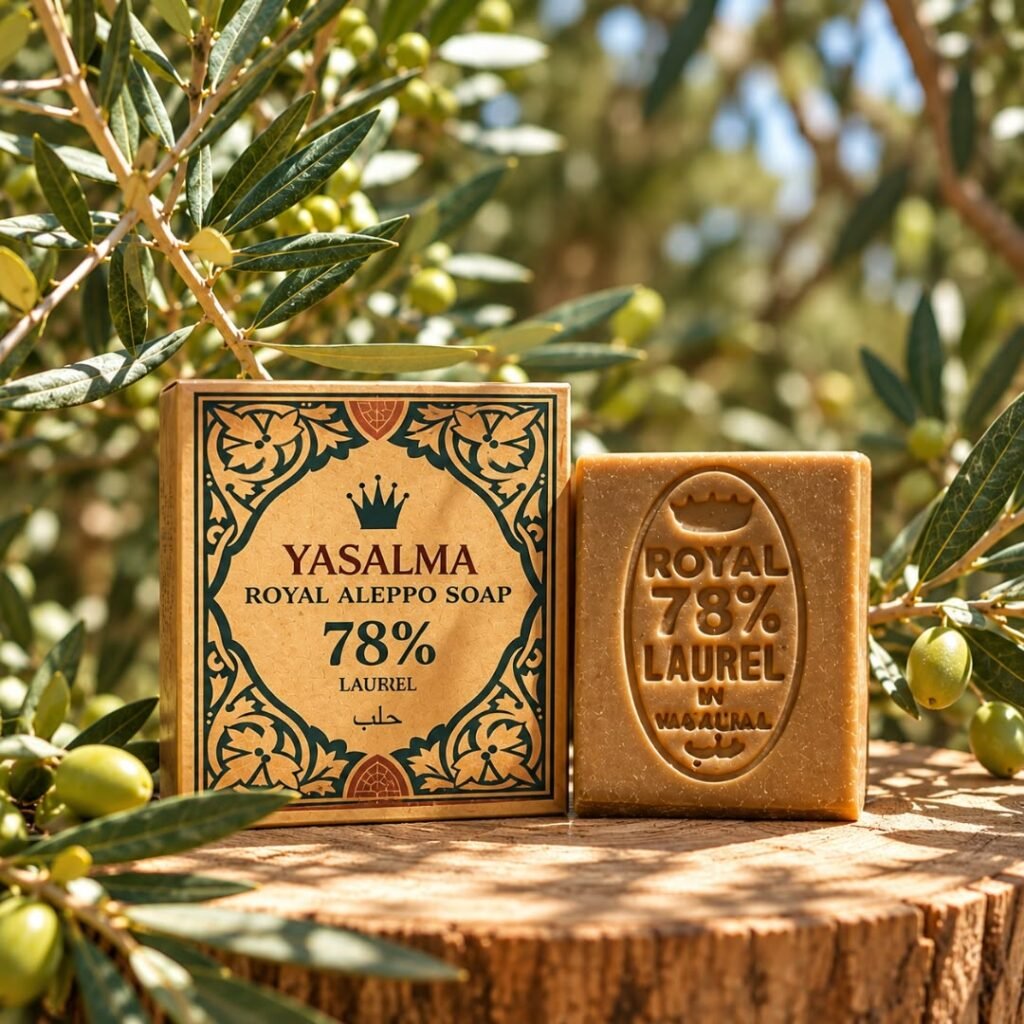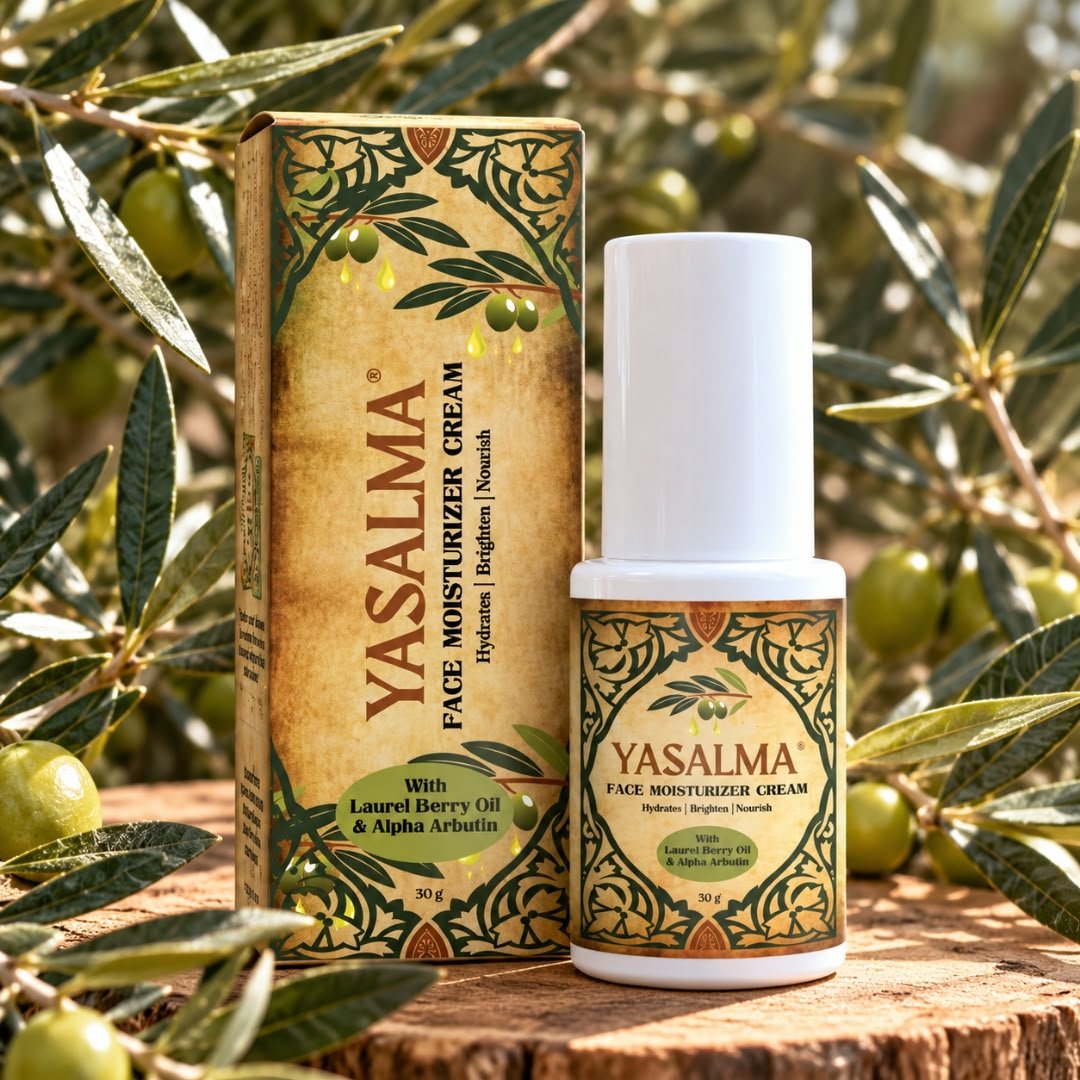
Choosing Yasalma means embracing purity, heritage, and true quality. Our soaps are produced in collaboration with skilled Syrian artisans who have been crafting Aleppo soap since 1925, using only 100% natural ingredients from Syrian and Turkish farms. With a premium blend of olive oil and high concentrations of laurel oil—up to 78%—Yasalma delivers exceptional benefits for both skin and hair. Each bar is finely ground, cold-pressed, and crafted with care to ensure density, longevity, and effectiveness. Free from harsh chemicals and safe for sensitive skin, Yasalma offers not just skincare, but a timeless ritual of wellness rooted in nature and tradition.
Our Royal 78% Laurel Oil Soap is among the highest-grade Aleppo soaps available worldwide. The higher the laurel content, the more powerful the benefits for your skin and hair.
Moisturizing, soothing, and naturally cleansing—suitable for all skin types, even sensitive skin. Customers have reported improvements in conditions like dryness, fine lines, pimples, and psoriasis.
Crafted using a cold-pressed process, Yasalma soap is dense, durable, and lasts longer than ordinary soaps. Its ability to sink in water is a mark of authenticity and quality.
Unlike regular soaps, Yasalma uses the highest dosage of laurel oil, making it a premium choice. The investment ensures your skin and hair receive the very best nature has to offer.
“I’ve already bought the round soap and the 78% laurel soap. In just 3 days, I can already see changes. Pimples have shrunk and dried up.”

Carryn Zenith
Designation
“Before this, my skin was dry, but now it’s fine, and the fine lines have disappeared. I’m using the 78% type.”

Velicia Collins
Designation
“I use the 78% one, and I have psoriasis. After just one use, the itchiness disappeared, and my skin feels moisturized.”

Andrew Gerrald
Designation
1. What ingredients are used in Yasalma soap, and are they natural?
Yasalma soap is made with 100% natural ingredients, including olive oil and high-quality laurel oil.
2. How is Yasalma’s Aleppo soap different from other Aleppo soaps on the market?
Yasalma’s Aleppo soap contains a high concentration of laurel oil, up to 78%, and is produced in collaboration with Kadahco, a well-established company in Aleppo City, Syria, known for its quality standards.
3. Why does Yasalma soap sink in water?
The 78% laurel oil soap is cold-pressed into a dense form, causing it to sink. This characteristic actually highlights its quality rather than indicating a defect.
4. What are the benefits of using Yasalma soap on the skin and hair?
The natural ingredients, particularly laurel oil, are known to provide soothing and nourishing effects, supporting healthier skin and hair.
5. Is Yasalma soap suitable for sensitive skin?
Yes, because it’s made with natural ingredients and free from harsh chemicals, Yasalma soap is generally suitable for sensitive skin.
6. How long does Yasalma soap last compared to regular soaps?
Due to its dense and solid form, Yasalma soap lasts longer than regular soaps, even with daily use.
7. What is the ideal way to store Yasalma soap to maintain its quality?
It’s best to store Yasalma soap in a dry, ventilated area to prevent it from becoming soft and to prolong its life.
8. Does Yasalma soap have a scent?
Yes, the soap has a natural, earthy scent from the laurel and olive oils, which gives it a refreshing aroma without any artificial fragrances.
9. Why is Yasalma soap more expensive than other soaps?
Yasalma soap uses high-quality, pure ingredients with a high concentration of laurel oil, which makes it more expensive but also provides superior benefits.
10. Can Yasalma soap be used daily, and is it safe for all ages?
Yes, Yasalma soap is gentle enough for daily use and is generally safe for all ages due to its natural formulation.
11. Why do some people get acne a few days after using Yasalma soap?
Some people may experience a temporary increase in acne when they start using Yasalma soap, as the natural ingredients like laurel oil can encourage the skin to purge impurities trapped in the pores. This ‘purging’ phase is common when switching to a new skincare product, especially one with natural oils, and it generally resolves as the skin adjusts.